How to Plan a Small Backyard Vegetable Garden Without Overspending
A few fresh vegetables from your own backyard sounds wonderful. Figuring out where to put them—and what you actually need to buy—can feel much less straightforward.
Before long, your shopping list might include raised beds, matching planters, bags of soil, tools, seeds, and an irrigation kit. You can spend a surprising amount before planting anything.
A small backyard vegetable garden can begin with a simpler plan. Choose a manageable space, decide what you want to grow, and spend on the basics that support those plants. You can add more after you understand what works in your yard.
At Eco Home Edit, we believe greener living should feel practical and affordable. Here’s how to plan your first growing space with that approach in mind.
This article contains affiliate links. If you purchase through them, Eco Home Edit may earn a commission at no extra cost to you.
Interested in gardening as part of a more self-reliant home? Take a look at The Self-Sufficient Backyard, a book that brings together gardening and broader homesteading projects. The steps below will help you identify what makes sense for your own space before you commit to supplies or a larger project.
1. Decide What You Want From Your Garden
Start with a goal you can picture using in everyday life.
Perhaps you want a few ingredients for salads, herbs for meals, or a weekend activity to share with your family. That is enough of a reason to start. Your first garden doesn’t need to supply every vegetable you eat.
Write one sentence before making a shopping list:
“This season, I want to grow ______ in a space I can comfortably maintain.”
Then give yourself a spending limit. Keeping the goal and budget together makes it easier to decide whether a purchase belongs in your first garden or on a future wish list.
2. Check the Space Before Choosing Plants
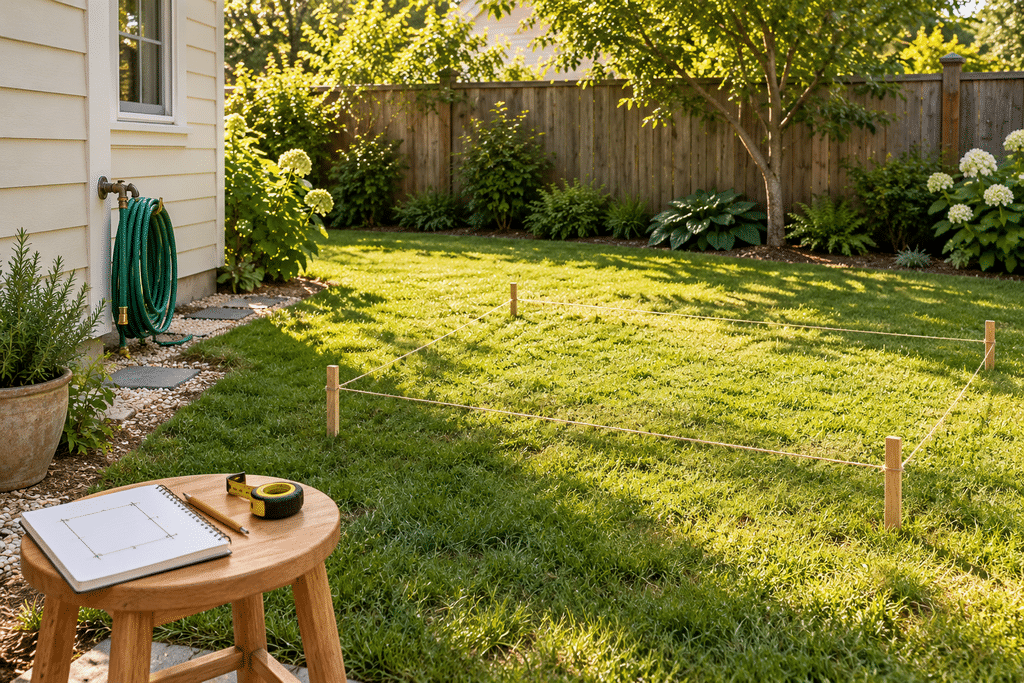
Spend a day observing your proposed garden location. Take a photo in the morning, around midday, and in the afternoon. Note where buildings, fences, and trees cast shade.
Choose a vegetable garden location with at least six hours of direct sunlight, convenient water access, and room to reach the plants.
Mark the usable area with string or a few objects you already own. Walk around it while imagining yourself watering, carrying supplies, and harvesting. A layout that looks attractive on paper still needs to work with the way you use your backyard.
If you rent, check permission before digging or installing permanent structures.
3. Choose One Growing Setup
You don’t need to start with containers, several raised beds, and a greenhouse all at once. Compare one small version of each option before committing.
| Setup | When it may make sense | Costs to include in your comparison |
|---|---|---|
| Containers | You want a small, flexible starting point | Pots, suitable potting mix, plant supports, and watering supplies |
| Raised bed | You want a defined growing area | Frame, enough appropriate growing material to fill it, delivery if needed, and supports |
| In-ground patch | You have suitable soil and permission to dig | Soil testing, preparation tools, and any recommended amendments |
Make the comparison using the full setup cost. An inexpensive empty planter can become a larger purchase once you add everything needed to fill and plant it.
For an in-ground garden, ask your local extension service about soil testing, including contaminant testing when the property’s history warrants it. Choose amendments based on the results rather than buying several products and hoping one helps.
If you’re considering several types of growing spaces, the publisher lists raised beds and container gardening among the subjects in The Self-Sufficient Backyard. See the book’s gardening and backyard project topics and compare them with the kind of setup you have in mind.
4. Pick a Short List of Crops
List the vegetables and herbs your household actually uses. Narrow that list to a few crops suited to your sunlight, space, and local growing season.
For each one, answer three questions:
- Will we use the harvest?
- Do we have enough room for the mature plant?
- Can we meet its care needs?
A plant can be appealing without being right for your first garden. Give yourself permission to leave it for another season.
Check the exact variety before buying. A label such as “compact” or “patio” is a starting point; read its mature dimensions and growing instructions too. For pots, match both container depth and volume to the plant’s needs.
Choose quantities only after checking spacing. It is easy to buy several small seedlings without realizing how much space they will eventually occupy.
5. Match Planting Dates to Your Location
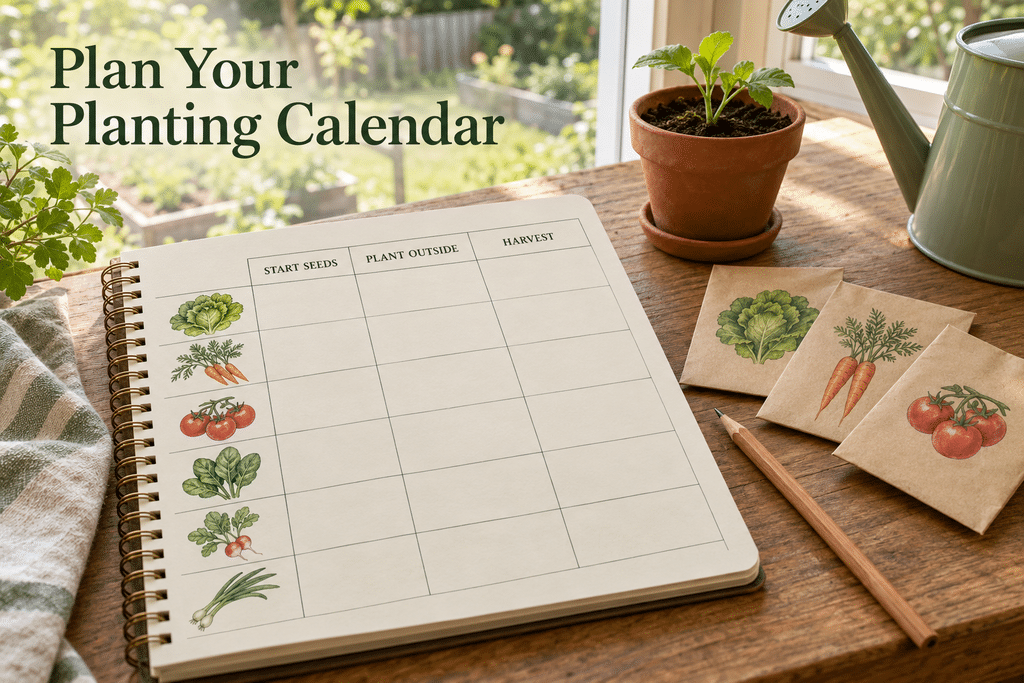
A garden photo from another state is inspiration, not a planting calendar.
Look up a vegetable planting guide from your local cooperative extension service or Master Gardener program. Check whether your selected crops should be started from seed, transplanted, or saved for a later planting window.
Planning is useful even when planting needs to wait. Use that time to measure your space, compare supplies, and work out a budget. You don’t have to buy live plants simply because you feel ready to begin.
Make a short calendar with three entries for each crop: when to start, when to plant outside if applicable, and the approximate harvest window listed for the variety.
6. Spend on the Growing Basics First
Give every item on your shopping list a job. What does it help you do, and do you already own something suitable?
Your initial list might include appropriately sized containers or a prepared bed, suitable growing material, seeds or seedlings, a way to water, and supports for the crops that need them.
For containers, choose potting mix intended for container growing. Garden soil is generally unsuitable for pots because it can compact and drain poorly.
Inspect any containers you reuse. They need drainage and enough room for the crop. Avoid containers that previously held pesticides, fuel, or other hazardous substances.
Decorative labels, matching pots, and elaborate accessories can wait. A plain setup gives you room to learn without tying up your budget in appearances.
7. Make a Budget Before Shopping
Here is an illustrative $100 spending plan, not a price quote or a promise that every garden can be established for this amount. It assumes you already have water access and basic hand tools and are starting with containers.
| Budget category | Example allowance |
|---|---|
| Containers, combining suitable reused pots with any needed purchases | $20 |
| Container potting mix | $35 |
| Seeds or a few seedlings | $20 |
| Supports or a missing basic supply | $10 |
| Unspent reserve | $15 |
| Total limit | $100 |
Check local prices and calculate the amount of mix your chosen containers require before buying. If the essentials exceed your limit, reduce the number of containers or plants. Keep each plant’s basic needs intact.
Record what you spend, including later purchases. A garden may provide useful food and enjoyment without paying back its setup costs in the first season. Honest records help you decide what is worth repeating.
8. Plan for Ordinary Busy Days
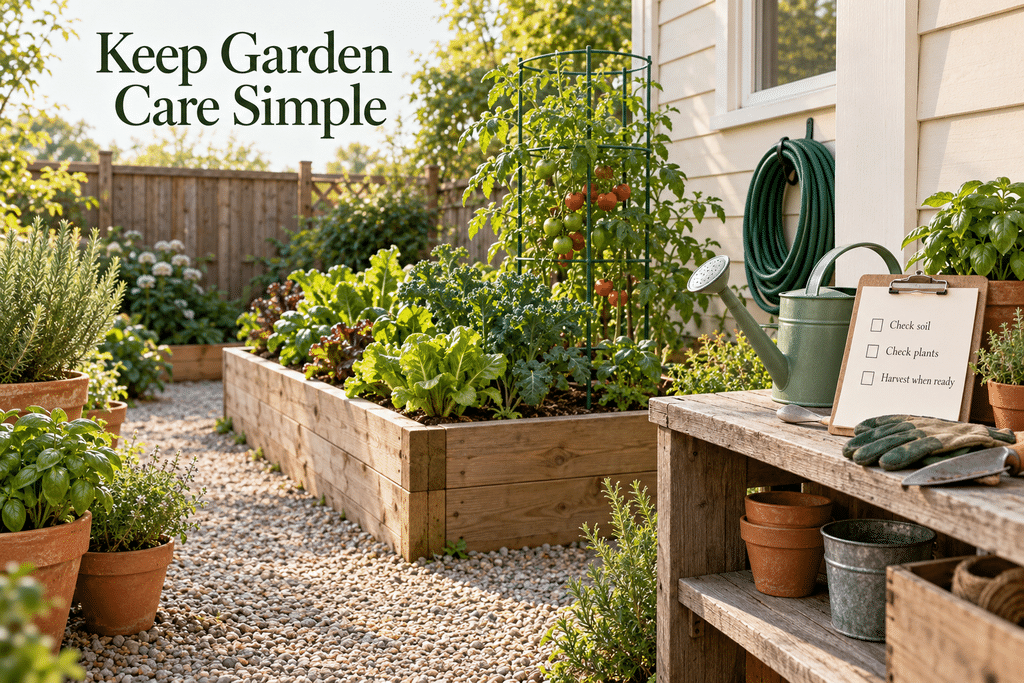
Picture the garden on a weekday when you have errands, appointments, and dinner to make.
Where will the watering supplies live? Who will check the plants when you are away? Can you reach the back of the bed without stepping into it?
Make those decisions before planting. Leave yourself a simple note with each crop’s care instructions so you aren’t trying to remember everything at once.
Container plants need regular attention to moisture and nutrients. Check conditions rather than assuming one watering schedule will suit every pot and every week.
A manageable routine belongs in your garden plan just as much as the layout does.
9. Keep Notes Before Expanding
Use a notebook or your phone to record what you planted, when you planted it, what you spent, and what you actually harvested and used.
At the end of the season, ask:
- Which plants earned their space?
- Which supplies were useful?
- What felt difficult to maintain?
- What would I change before spending more?
There is no requirement to expand. Repeating a small setup that works for your household is a worthwhile result.
When you bring food indoors, give it a visible place so it gets used. Our refrigerator organization ideas can help you keep track of what needs eating first.
An Optional Resource for Broader Backyard Projects
If your interests extend beyond a first vegetable garden, The Self-Sufficient Backyard by Ron and Johanna Melchiore may be worth exploring.
The publisher’s sales page describes gardening and homesteading topics including raised beds, container gardening, composting, water collection, and food storage. Its scope is broader than the simple starter plan in this article.
We have reviewed the product description, not independently tested the book or its projects. Consider your available space, time, and interests before buying. You can begin with a small growing space and add a learning resource when its subjects match your next goals.
Explore The Self-Sufficient Backyard and see what it includes →
Affiliate link: Eco Home Edit may earn a commission if you purchase, at no extra cost to you.
Your First Step Can Be Small
Before ordering supplies, choose one possible growing spot, observe its sunlight, and write down a few foods you would enjoy growing.
Those decisions give your garden a purpose and your shopping list some boundaries. Build from there at a pace your household and budget can support.
Want to explore what could come after your first garden? View The Self-Sufficient Backyard and its included projects to decide whether it belongs in your plans.
Eco Home Edit helps everyday people create healthier, greener homes without spending a fortune.


